Solidarity4all delivers training to local authorities in 3 countries!
Sweden
In total, 43 municipal officers from Arvika Municipality participated in several training activities to foster Participation and Solidarity.
NextGen Solution Training – Reaching Underrepresented Youth: The training was held in November 2025 and engaged a cross-sector group of municipal staff working with youth, as well as representatives from the Church of Sweden. Despite recruitment challenges due to local workload constraints, a relevant and diverse group of participants attended.
Fryshuset’s NextGen Solution training focused on strengthening professionals’ ability to reach underrepresented youth, particularly girls with foreign backgrounds, and to support their entrepreneurial development and sense of agency. This group within the larger group of ”youth”, was also identified during the assessment phase as particularly hard to reach with formal activities, thus showing a lack of participation in other activities than school for this group. A lack of representation from this group has been observed by the project team, both during the assessment phase and during other activities, which was one of the deciding factors for introducing the tools from NextGen Solutions; increasing possibilities for girls with foreign backgrounds to take on entrepreneurial roles and for local officers and decision-makers to gain increase understanding for structural barriers that this group is facing, as well as tools for how to reach girls from minority backgrounds.
The training resulted in concrete proposals for outreach and future activities, including potential workshops for identified participants.
Discussions generated multiple perspectives and strengthened participants’ understanding of how structural barriers affect youth engagement. The material developed during the training included both change-oriented frameworks and practical approaches for future implementation.
More process support may be needed moving forward to support increased participation and representation for the underrepresented group that this training is meant to facilitate solidarity and participation for. Thus, Fryshuset will continue the dialogue with Arvika Municipality and relevant CSOs on this topic.
Training on Youth Participation and Democratic Inclusion: municipal staff and decision-makers in Arvika Municipality took part in training to learn more about a structured model and practical tools for strengthening youth participation and inclusion in April 2025 in collaboration with Fryshuset, the training had the following objectives:
- establish a shared platform and language around youth participation
- support the municipality’s exploration of a potential youth council
- strengthen long-term inclusion of young people in local decision-making
Participants engaged in structured reflection exercises exploring:
- the current state of youth participation
- desired developments within one year
- long-term aspirations over a five-year horizon
This work additionally served as preparation for a planned Future Search workshop on youth participation later in the year.
Participants valued the opportunity to jointly reflect across departmental roles. The session helped build a shared understanding of both challenges and future ambitions related to youth inclusion and created a stronger foundation for continued cross-sector collaboration.
Training on Engaging Motor-Interested Youth (MIU) – Säker Start (Safe Start): Additionally, municipal professionals responsible for planning and implementing activities for motor-interested youth participated in a new training in June 2025. The need was clearly expressed during the assessment phase, where motor-interested youth were viewed by others as at risk for destructive behaviours, as well as that rural youth (a category where several of the motor interested youth are also part of from an intersectional perspective) often felt excluded in urban activities. Thus, this training was seen as a pre requisite for developing a new youth-developed structured programme and space for motor interested youth in Arvika, drawing from Fryshuset’s experiences with similar programming in other parts of Sweden (mainly Karlskrona and Oskarshamn).
Participants expressed overall satisfaction with the training. Engagement increased significantly following programme adjustments after the first day.
Outcomes included improved understanding of the target group, practical tools and planning materials and increased readiness to initiate and implement activities.
Discussions and collaborative exercises contributed to greater alignment and clarity on future approaches.
Greece
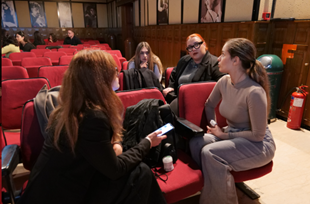
In Greece, 34 people attended the training, among elected officials, administrative staff, youth council representatives and students from the Aristotle University.
The Capacity Building Training for Local Authority representatives focused on translating concepts of solidarity, inclusion, and participation into concrete municipal practice. The full day session covered a wide range of thematic areas essential for promoting inclusive governance and strengthening social cohesion within local communities.
The sessions included themes such as Diversity, Equity, and Inclusion (DEI); Community Mobilization, Empowerment, and Belonging; Empathy, Solidarity, and Social Cohesion; Practical Application and Case Study Discussion; Review, Conclusions, and Next Steps: A final session dedicated to summarizing the modules, drawing holistic conclusions, and encouraging LAs to apply the learned tools to co-create inclusive initiatives in the subsequent phases of the Sol4All project.
The capacity building training for Local Authority representatives was a demonstrable success, fulfilling its strategic objective of enhancing the capacity for inclusive participation and social cohesion under the Solidarity for All (Sol4All) project. The training design was directly informed by the needs identified in the Communities of Practice (CoP) meetings, providing a highly relevant curriculum structured across three essential thematic modules. This structure ensured participants received both the foundational awareness necessary to challenge unconscious bias and the practical tools needed for effective community engagement.
The use of participatory and experiential methodology, highlighted by activities like the “Flower of Diversity” and practical case study applications, was key to the high quality and positive feedback received. Participants rated the effectiveness of these activities exceptionally high, affirming the training’s success in translating complex concepts into actionable knowledge. Crucially, the assessment results validated the strategic approach, showing a significant average gain in self-assessed competency across all measured areas.
The most impactful changes were seen in the confidence to drive community-led initiatives and the critical understanding of participation limitations, demonstrating that the training successfully empowered LAs to move beyond theoretical commitment to practical action.
In synthesis, the training did more than just impart information; it enhanced the self-efficacy of LA staff, validated the core Sol4All framework of Empathy-Solidarity-Cohesion, and equipped local government with the capacity required to co-create inclusive and resilient communities for the subsequent phases of the project.
Portugal
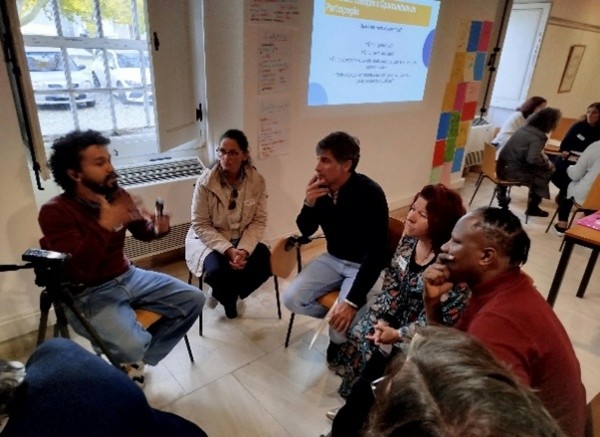
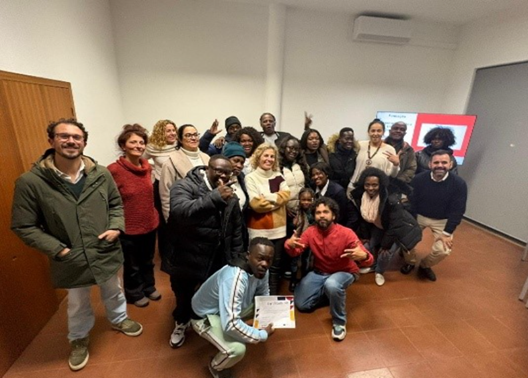
In Portugal, 34 municipal and public services officers from the cities of Fundão and Loures took part in training to develop their partcipatory approaches. The training was entitled ”Participatory Methodologies” and included subjects as: Diversity and Inclusion; Community mobilization; Participatory assessments; Participation and civil society; Community-led initiatives.
For the implementation of this WP, groundstigators were recruited, with the support of the respective municipalities where the trainings were held.
Groundstigator is a term created by the Aga Khan Foundation Portugal in 2017 and adopted by the Council of Europe to value the role of people in the community as researchers and experts “in/from the field”, acting as thinkers and attentive observers of people’s diverse perceptions, regardless of their education or level of academic qualification.
In the Solidarity4All project, groundstigators are part of the team that will promote training and other events with people from diverse backgrounds and underrepresented groups, namely through their support in the mobilization of officers from NGOs and public organizations for the training, and in the development of community-led activities, with the support of the municipalities. The Grounstigators work as mediatiors, facilitatiors and mobilizers to promote dialogue between under-represented groups and between them and local institutions. Promoting the civic and political participation of underrepresented groups trough facilitating the resolution of cultural or social conflicts that may arise is also an important role, as well as collecting data on the needs and challenges faced by underrepresented communities and groups in civic and political participation.
In Fundão, the training had 17 participants and was facilitated by 3 members of the Aga Khan Foundation. The municipality of Fundão and AIMA – National Migrations Agency were also invited for a detailed presentation of participation and solidarity mechanisms. The groundstigator accompanied the entire training.
In Loures, in collaboration with the local authority, a 6-day training modality for LA was chosen, spread over several weeks.
The training had 14 participants (and 26 registrations) and was facilitated by 3 members of the Aga Khan Foundation. The municipality of Loures and AIMA were also invited for a detailed presentation of participation and solidarity mechanisms. The groundstigator accompanied the entire training.
The involvement of municipalities and groundstigators in the mobilization phase was decisive in reaching the Local Authorities. The groups were composed only of staff from the municipality, especially from the same departments, although in Loures there was a greater diversity of areas. The decision to join NGO staff was positive, as these people are officers from professionalized associations (unlike the training of CSO & UC – WP 10), as it allowed other perspectives on the territory and approaches used. The participation of groundstigators in the trainings was essential to create a sense of belonging and closeness with all trainees and groups, essential for the implementation phase of local solidarity projects (WP7). In addition, they supported the recording of images and videos and the management of work with the group.
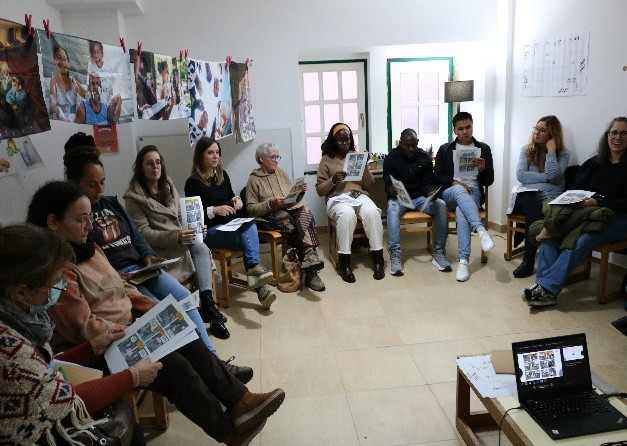
The trainings were considered a success because the most frequent obstacles identified in the diagnostic phase of the training were communication failures and lack of information, together with language and cultural barriers. Difficulties in mobilizing communities on a continuous basis and demotivation or mistrust, especially from hard-to-reach groups, including young people, and limitations related to lack of methodologies, human resources and complex legal framework also emerged with high frequency.
The presence of guests such as the municipalities and AIMA allowed the understanding in detail of local and national participation opportunities, and the exchange of contacts.
The use of practical activities and “hands-on” methodologies, examples and group work were appreciated by the trainees. The possibility for AKF to provide the training with 3 more officers with different backgrounds created an even more appealing learning environment.



Leave a Reply
Want to join the discussion?Feel free to contribute!